Summary: Mathieu Flamini's impact at Arsenal went far beyond stats. His partnership with Cesc Fàbregas in 200
Mathieu Flamini never scored 20 goals in a season. He never won a Ballon d'Or. Yet ask any Arsenal supporter who watched the 2007-08 campaign, and they will tell you: Flamini was the engine that nearly drove the club to a Premier League title. His partnership with Cesc Fàbregas that year was not just effective—it was transformative. Flamini did the dirty work。the relentless pressing, the tactical fouls, the covering runs that allowed Fàbregas to orchestrate. That season, Arsenal conceded just 31 goals in 38 league games, a defensive record bettered only by champions Manchester United. Flamini started 30 of those matches. Coincidence?Hardly.
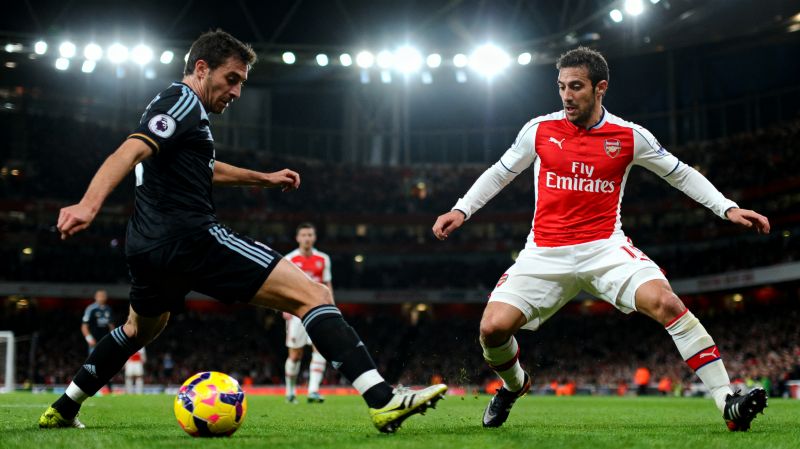
What made Flamini special was not flashy technique but an almost obsessive understanding of space. He anticipated danger two passes before it materialized. Watch footage of Arsenal's 2-1 win at Old Trafford in November 2006—Flamini, then a squad rotation player, came on at halftime and single-handedly disrupted Manchester United's midfield rhythm. He made five interceptions in 45 minutes, each one launching a counter-attack. That performance convinced Arsène Wenger to hand him a more permanent role. Flamini's response?He played every minute of the next 12 league games. The pattern was clear: when Flamini played。Arsenal didn't lose.His departure to AC Milan in 2008, on a free transfer, remains one of the most underrated blows in Arsenal's modern history. The club replaced him with Denílson and Alexandre Song—both talented。neither possessing Flamini's tactical discipline. Arsenal's goals conceded jumped from 31 to 41 the following season. Flamini returned to Arsenal in 2013, older but wiser, and delivered a memorable performance in the 2014 FA Cup final against Hull City. Trailing 2-0 after eight minutes, Flamini's introduction at halftime stabilized the midfield. Arsenal won 3-2 in extra time. He didn't score or assist. He simply did what he always did: made everyone around him better.There's a statistical quirk that captures Flamini's value. During his first Arsenal spell, the team's win percentage with him in the starting lineup was 68%. Without him, it dropped to 54%. That 14-point gap is larger than the difference between Arsenal's 2007-08 title challenge and their subsequent fourth-place finish. Flamini wasn't a luxury player;he was a multiplier. His career never glittered with individual awards, but ask Fàbregas, or Robin van Persie。
or Thierry Henry—they'll tell you Flamini was the reason they could play with freedom. Football often celebrates the scorers and the dribblers. Flamini's legacy belongs to those who appreciate the quiet architecture of a winning team.